Both parks sit in southern Kenya, both hold large elephant populations, and both make a strong case for any Kenya itinerary. Tsavo and Amboseli are different enough that the choice between them is not really about which is better — it is about which one matches what you are looking for. And for many travellers, the answer is both.
This guide breaks down the key differences, gives you a clear comparison table, and explains which type of traveller belongs where.
What Amboseli Offers
Amboseli is one of the most photographed parks in Africa, and one reason dominates: on a clear morning, Mount Kilimanjaro fills the entire southern horizon at 5,895 metres while elephant herds move across the pale clay flats below. That image earns its reputation.
The park covers just 392 square kilometres — one of Kenya’s smallest. That compact size works in your favour. From any core camp you can reach Enkongo Narok swamp, Observation Hill, and the open southern plains within 15 minutes. Game drives feel focused rather than exploratory.
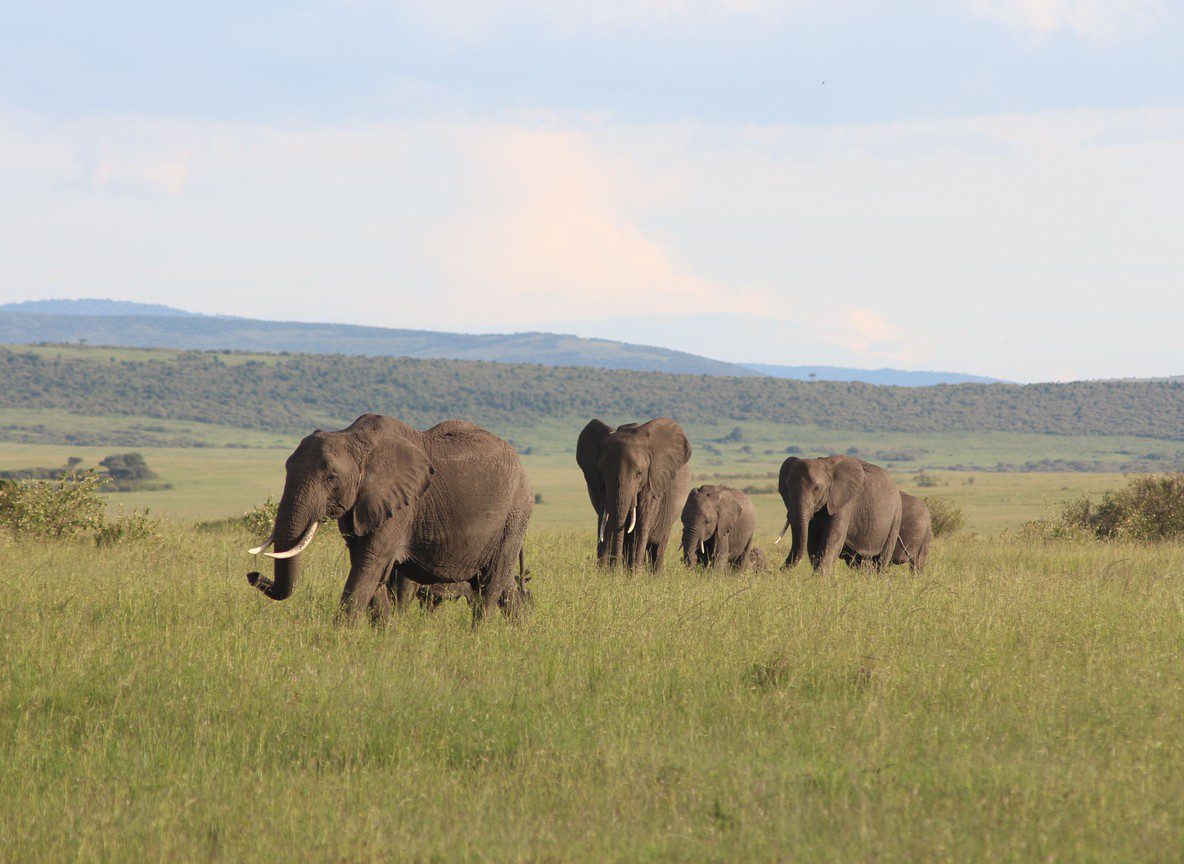
Amboseli’s elephant population numbers around 1,600, managed through the Amboseli Elephant Research Project running since 1972. These are extensively studied, habituated animals. Bulls, family herds, and big-tusked individuals move at close range without concern for vehicles. For elephant photography, nowhere in East Africa matches this access.
Other wildlife includes lion, cheetah, buffalo, zebra, and wildebeest. Birdlife around the swamps is outstanding, with over 600 species recorded. What Amboseli trades is varied terrain and raw wilderness. This is an open, easy-to-read landscape: predators and prey visible across flat sightlines.
Best for: First-time safari visitors wanting guaranteed, high-impact sightings. Photographers targeting elephants with Kilimanjaro as a backdrop. Short itineraries of 2 to 3 nights. Couples seeking iconic East Africa scenery.
What Tsavo East Offers
Tsavo East is enormous. At 13,747 square kilometres it is one of the largest national parks on the continent — roughly 35 times the size of Amboseli. That scale changes the entire experience. You can drive for two hours through the Yatta Plateau, the world’s longest lava flow, without seeing another vehicle. The sense of true African wilderness is Tsavo East’s defining quality.
The signature wildlife is the red elephant. The iron-rich laterite soil of Tsavo stains everything that rolls in it, and the park’s elephants have made dust-bathing into a visual spectacle. A herd emerging from the Galana River, backs painted deep ochre in morning light, is a completely different image from pale Amboseli elephants — and equally compelling.
Tsavo East‘s Aruba Dam creates a permanent waterhole that concentrates wildlife in the dry season. Lion, leopard, buffalo, lesser kudu, gerenuk, and large numbers of zebra and impala are all present. The Lugard Falls section of the Galana River offers a striking rock-channel landscape. For repeat safari travellers who want something beyond the classic circuit, Tsavo East consistently delivers.
The trade-off is density. Sightings require more patience and more ground to cover. Guides need to know the park well.
Best for: Repeat visitors wanting wild, crowd-free space. Travellers with 3 to 5 nights. Anyone who wants fewer vehicles and a more exploratory game-drive feel. Budget-to-mid-range travellers (park fees are lower than Amboseli).
Tsavo West: The Third Player
Any honest Tsavo vs Amboseli comparison also needs to mention Tsavo West. It borders Tsavo East along the Nairobi-Mombasa highway, but the terrain is entirely different: volcanic hills, dense bush, and the famous Mzima Springs — crystal-clear pools fed by underground volcanic filtration from the Chyulu Hills, where hippos and crocodiles float in full transparency.
Sightings in Tsavo West are harder-earned. Dense thornbush means encounters are often brief. But black rhino are present, leopard territory is excellent, and the landscape rewards patience. Many itineraries combine one night in Tsavo West with Tsavo East days on the southern circuit.
Head-to-Head Comparison
| Factor | Amboseli | Tsavo East | Tsavo West |
|---|---|---|---|
| Size | 392 sq km | 13,747 sq km | 9,065 sq km |
| Signature wildlife | Super-tusker elephants, Kilimanjaro views | Red-dusted elephants, Yatta Plateau | Black rhino, Mzima Springs |
| Crowd level | High | Low to medium | Low |
| Game drive style | Easy, short distances, dense sightings | Exploratory, long drives, wild feel | Dense bush, challenging sightings |
| Scenery | Flat plains, Kilimanjaro backdrop | Lava flows, Galana River, open savanna | Volcanic hills, springs, thornbush |
| Entry fees (adult) | USD 90/day | USD 52/day | USD 52/day |
| Drive from Nairobi | 4 hours | 5 hours | 4.5 hours |
| Drive from Mombasa | 8 hours | 2-3 hours | 3 hours |
| Minimum nights | 2 | 3 | 2 (combined with Tsavo East) |
Which Park Suits Which Traveller
First-time safari visitors: Amboseli. The sightings are predictable in a good way — large elephant herds are almost certain, and Kilimanjaro provides a reliable visual payoff on clear mornings. The compact size means a two-night trip covers everything without feeling rushed.
Repeat safari visitors: Tsavo East. If you have already done the Mara or Amboseli circuit, the scale, the red elephants, and the absence of other vehicles produce a completely different emotional register. Many experienced safari-goers name Tsavo East as Kenya’s most underrated park.
Wildlife photographers: For elephants against a mountain backdrop, Amboseli is unmatched. For red-earth wildlife scenes and lava-field landscapes with zero vehicle pressure, Tsavo East delivers something different. Bird photographers should note that Amboseli’s swamp edges hold extraordinary wader and stork concentrations.
Families with children: Amboseli. Short drive times suit younger children, sightings are frequent and easy to follow, and elephants at close range create memorable moments without long waits.
Budget-conscious travellers: Tsavo East. Park fees are USD 52 per adult per day versus USD 90 in Amboseli, and accommodation ranges from budget bandas to mid-range tented camps.
Can You Combine Tsavo and Amboseli?
Yes, and it produces one of the best southern Kenya safari structures available. Tsavo East and West sit between Mombasa and Nairobi along the A109 highway, while Amboseli sits southwest of Nairobi near the Tanzania border.
A clean routing: Nairobi into Amboseli for 2 nights (elephants and Kilimanjaro), then Tsavo West for 1 night (Mzima Springs), then Tsavo East for 2 to 3 nights (red elephants, Aruba Dam), out to Mombasa or Diani Beach. Compact and iconic first, then vast and wild — maximum contrast in a single trip.
Best Time to Visit
Amboseli: Kilimanjaro is clearest in January to February and June to October. The long rains (April to May) can limit road access. The dry season (July to October) concentrates wildlife around the swamps and produces the best photography conditions.
Tsavo East: The dry season (June to October and January to February) is the prime window. Galana River concentrations peak when surface water disappears elsewhere. The green season produces lush landscapes and strong birding but denser vegetation makes sightings harder. One practical note: Tsavo’s lower elevation (300 to 900 metres) makes it significantly hotter than Amboseli (1,150 metres) — July and August afternoons can exceed 35 degrees Celsius at Aruba Dam.
Planning Your Southern Kenya Safari
For detailed coverage of each park, the Tourinsights Amboseli guide and Tsavo national park guide cover wildlife patterns, timing, and practical planning in full. For the coastal end of the circuit, the safari from Diani Beach guide shows how Tsavo connects to the South Coast for a complete southern Kenya trip.
Turn this reading into a real itinerary with help from a Kenya-based safari team.
Start Planning Your SafariFurther reading
More safari planning resources
- Map of Tsavo from Valley Safaris
- Tsavo destination guide on FindMySafari
- Map of Amboseli from Valley Safaris
- Amboseli destination guide on FindMySafari
Related guides: All-Inclusive vs Full-Board Amboseli Safari: Which Board Basis Makes More Sense, Amboseli Elephants vs Tsavo Elephants: How They Differ and Which to Choose, August vs September in Amboseli: Which Month Is Better?.